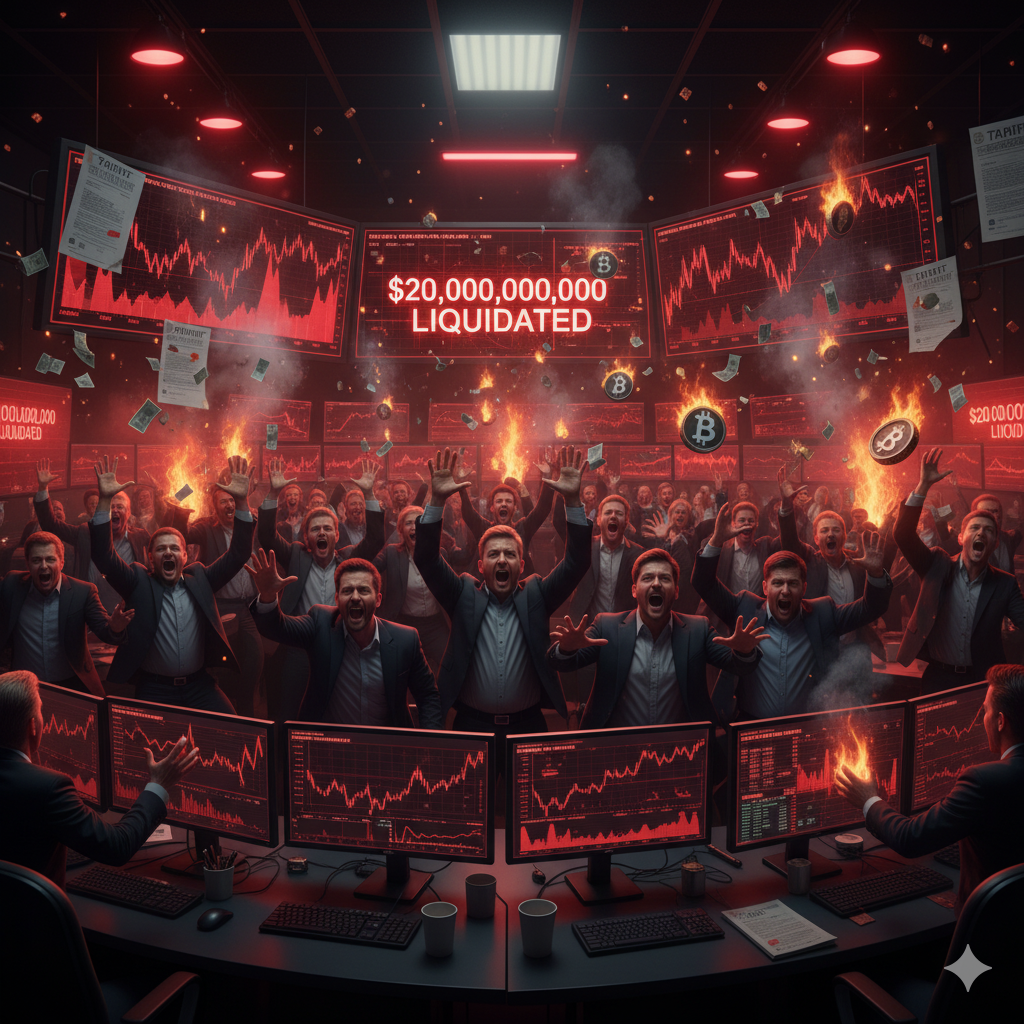
So there I was, sitting at my desk with three monitors open, coffee getting cold, when the tariff news dropped. And dude—I mean, dude—the charts just went absolutely bonkers. Within four hours, we’re talking nearly $20 billion in liquidations. That’s not a crash. That’s a massacre.
I watched a token I’d been following swing from about $1 down to $0.07. Then bounce back to $0.60. In minutes. My stomach was in my throat just watching it, and I wasn’t even holding the damn thing. I can’t imagine what the people who bought at the peak were going through.
That’s when it clicked for me: this wasn’t just market mechanics. This was theater. Orchestrated, deliberate, and designed to extract money from people like you and me.
The Perfect Storm Hits: Tariffs Collide With Crypto Chaos
Okay, so here’s the deal. Crypto doesn’t exist in some bubble separate from reality. It’s connected to everything—geopolitics, inflation, interest rates, presidential announcements. All of it.
Trump drops the tariff bomb on China. Boom. Suddenly every market is freaking out. Stocks bleeding. Bonds shifting. And crypto? Crypto just gets absolutely decimated because, honestly, it’s the most fragile and least regulated of the bunch.
But that’s where most people get it wrong. They think: “Oh, tariffs = crypto dumps. Supply and demand. Natural.”
Nope. Not even close.
How You Go From Diamond Hands to Liquidated in Four Hours
Let me tell you what I actually saw happen. It’s almost like watching a magic trick, except the magician is stealing your money.
A altcoin token starts gaining some traction. Real retail traders are buying it. Volume’s picking up. It’s got momentum. And then—here’s the key part—some whale or a crew of coordinated whales notice the energy around it. They smell blood in the water.
They already own a ton of these tokens. Now they start doing something called wash trading. Basically, they buy and sell between their own accounts, pumping the volume numbers without actually moving the market price much. But it looks like there’s insane volume. It looks like institutional money is moving in. Retail traders see it and go, “Oh crap, I’m missing this pump!”
They buy in. Hard. Some use leverage because they want that 5x or 10x return. The whale watches retail money pouring in, then they flip a switch. Dump. Everything goes down simultaneously.
By the time you realize what happened, your $10,000 position is worth $2,000. If you used leverage, it’s worth zero. You got liquidated automatically. The whale just made a fortune off your panic.
And look, I get it. I’ve fallen for this stuff too. Years ago, before I understood the game better, I watched a similar pump-and-dump play out. Threw $2,000 at some altcoin because my Discord group was hyped. Lost $1,800 in two days. That was a painful but essential lesson.

The Dirty Truth About Exchanges and Whales Playing Patty-Cake
Here’s the uncomfortable part nobody wants to talk about: the line between major exchanges and major manipulators is seriously blurry.
Some of these whales? They’ve got buddies at the exchange. Some of them are the exchange infrastructure. They see order flow before you do. They know where the liquidation cascades are about to happen. They can time their moves perfectly because they literally have access to information you’ll never see.
Wash trading. Spoofing. Pump-and-dumps. These aren’t accidents. They’re strategies. And the people doing them know the SEC isn’t coming after them in crypto markets because, let’s be honest, regulation is a joke right now.
I had a buddy who worked at a mid-tier exchange. One conversation with him and I realized just how exposed retail traders are. He wasn’t even being malicious about explaining it—he was just matter-of-fact about how obvious it all is to people on the inside.
Leverage Is a Loaded Gun Pointed at Your Foot
Let me paint a picture for you. You’ve got $5,000. You think Bitcoin’s gonna pump. Instead of buying $5,000 worth, you want to really make some money, so you use 10x leverage and buy $50,000 worth.
Feels great when the price goes up 3%. You just made $1,500. Awesome.
Then the tariff news hits. The price drops 5%.
Your position? It’s obliterated. Liquidated. Gone. All $5,000 plus whatever fees got charged. The exchange automatically closes your position because you don’t have enough collateral.
And this happens to millions of people simultaneously during volatility events. All those liquidations trigger more selling. More selling triggers more liquidations. It becomes this avalanche that feeds itself.
That’s where a lot of that $20 billion went. Not from whales dumping organic holdings—though that happened too—but from retail leverage positions getting wiped out in cascades.
The Macro Layer: Why Tariff News Is a Whale’s Best Friend
So why does Trump’s tariff announcement trigger such chaos in crypto specifically?
Because crypto traders are already living on the edge. We’re talking about a market where positions can get liquidated instantly. A market where most participants are speculators, not long-term hodlers. A market where leverage is readily available and barely regulated.
When tariff news drops, the risk-off sentiment hits hard. Institutional money starts rotating out. Retail traders panic-sell. But here’s the thing: that’s just the opening act.
The whales are waiting for this moment. They know retail is scared. They know positions are weak. They know leverage is about to blow up. And they know exactly how to accelerate the bloodbath to maximize their profits.
It’s almost like watching a shark sense blood in the water. Except the shark is a coordinated group of insiders, and the blood in the water is your liquidated position.
Trading During the Storm: Most Strategies Crash and Burn
I’ve tried every approach, honestly. Let me be real about what actually works and what’s just cope.
Hodling through it? Sure, if you don’t use leverage and you’ve got the stomach for watching your portfolio get cut in half. Most people don’t. Fear kicks in. You panic-sell at the bottom like everyone else.
Day trading the swings? This sounds good until you get stopped out right before the bounce, or the bounce never comes. You’re competing against algorithms and people with information you don’t have. It’s like playing poker against someone who can see your cards.
Using leverage to amplify gains during volatility? This is just asking to get rekt. I’ve done it. Lost money I couldn’t afford to lose. It’s honestly a trap for people who think they’re smarter than they are.
Shorting the crash? Sometimes this works. Sometimes you short at the top of a recovery bounce and get liquidated upside. Timing is everything, and most of us don’t have it.
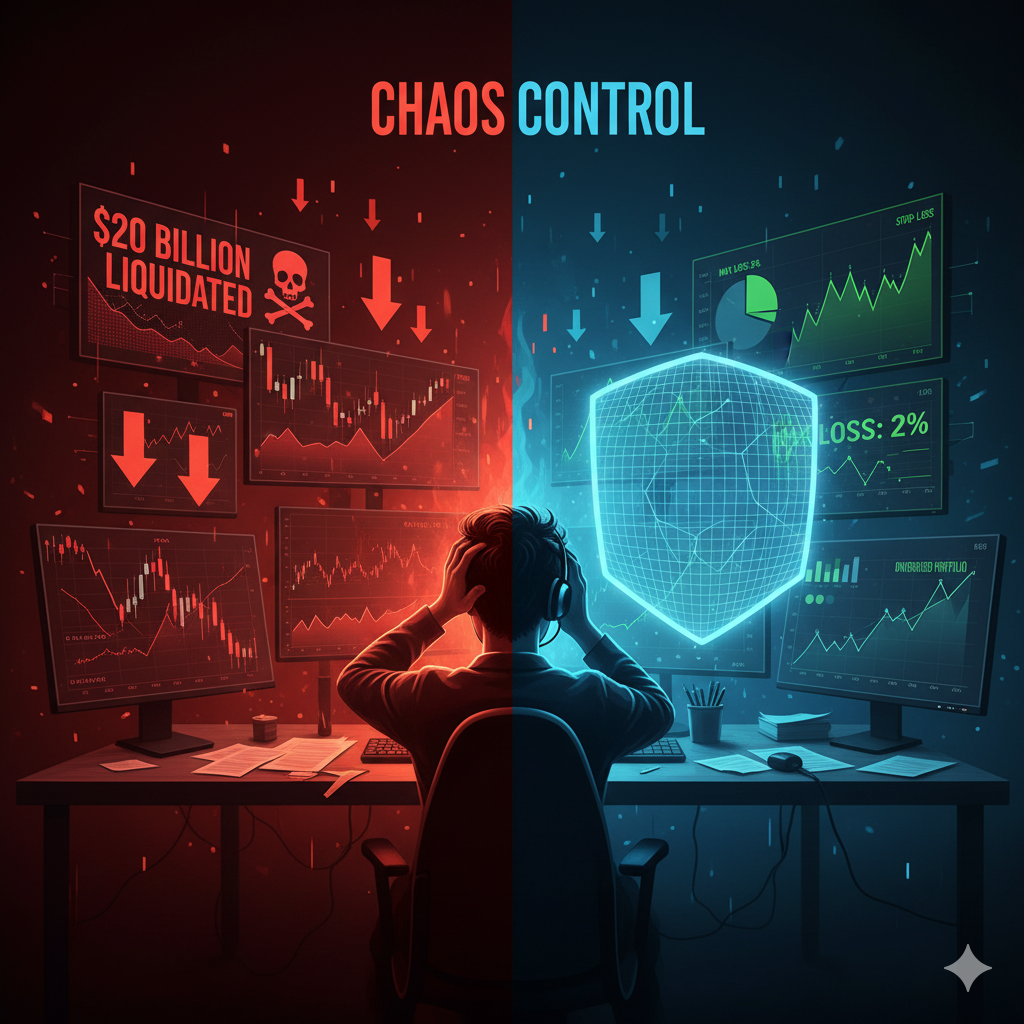
The realest strategy? The one that actually makes money? It’s boring as hell. Reduce your position size before volatility events you can see coming. Drop your leverage to zero or minimal levels. Don’t chase moves. Let things stabilize. Then re-enter when the chaos has cleared.
It’s not sexy. It doesn’t make for good Discord bragging rights. But it’s the one approach that actually preserves capital.
Why This Keeps Happening (And Why It’ll Keep Getting Worse)
The reason for the bloodbath in crypto isn’t some mystery. It’s structural.
The market is built in a way that favors insiders. The infrastructure enables manipulation. Retail traders bring emotion and leverage to a game that requires ice-cold strategy and access to better information. It’s a mismatch.
And every time there’s macroeconomic chaos—whether it’s tariffs, interest rate changes, geopolitical drama—the wolves come out and feed.
Until we see serious regulation, better transparency, and changes to how leverage works in crypto markets, this pattern just repeats. Macro shock hits. Volatility spikes. Whales manipulate. Retail gets liquidated. Rinse and repeat.
The crypto market will keep printing opportunities. Fortunes will still get made. But they’ll keep getting made at the expense of retail traders who don’t understand the game they’re playing.
How to Not Get Destroyed (Practical Thinking)
So what actually matters here?
Understand that volatility usually isn’t random. When you see a price move that seems insane, ask yourself: who benefits from this? Who has the resources to make this happen? Often you’ll realize it’s orchestrated.
Never assume your exchange is neutral. Conflicts of interest exist everywhere. Treat every platform with healthy skepticism.
Leverage is a debt, not a feature. Just because you can borrow money to amplify your returns doesn’t mean you should. The market will humble you faster than you think.
Size your positions like you’re wrong. Because you will be. A lot. If you position-size like you might be wrong about every trade, you’ll survive to trade another day.
Stay paranoid about sudden momentum. If something is pumping hard and you weren’t in it from the beginning, it’s probably too late. FOMO is the enemy.
The crypto market rewards patience, skepticism, and good risk management. It punishes greed, FOMO, and leverage abuse. Everything that happened on October 11th? That’s just the market teaching those lessons in the harshest way possible.
Want Better Tools to Navigate This Chaos?
Look, I’m not gonna pretend there’s a magic solution. But if you want to level up how you track and analyze market movements, check out www.Toolystic.site. It’s a free platform with solid tools to help you stay sharper—whether it’s analyzing volatility patterns, tracking market data, or just getting better visibility into what’s actually happening. Worth bookmarking if you’re serious about understanding crypto markets better.
Keep learning and stay connected:
- www.facebook.com/Aiuncle
- www.facebook.com/empowerbywaqas
- www.instagram.com/ai_uncle
- www.instagram.com/empowerbywaqas
- www.tiktok.com/empowerbywaqas
- www.dailymotion.com/empowerbywaqas